Setting your property investment goals is the essential first step in embarking on a well-thought-out roadmap. At its core, this journey involves the key decision of setting short-term and long-term goals, a strategic choice that holds the potential to significantly influence the trajectory of your investments. Let’s delve deeper into the nuances and benefits of both approaches.
Defining Short and Long-Term Property Investment Goals
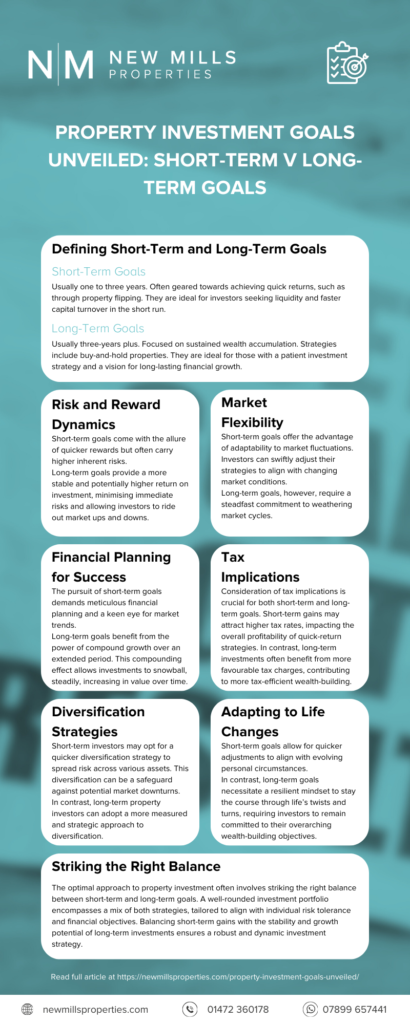
Short-term goals in property investment typically span a relatively brief timeframe, usually one to three years. These objectives are often geared towards achieving quick returns, such as through property flipping or generating immediate rental income. They are ideal for investors seeking liquidity and faster capital turnover in the short run.
In contrast, long-term goals extend beyond the three-year mark and are more focused on sustained wealth accumulation. Investments aligned with long-term goals include strategies like buy-and-hold properties. Long-term goals are suited for those with a patient investment strategy and a vision for long-lasting financial growth.
Risk and Reward Dynamics
Short-term goals come with the allure of quicker rewards but often carry higher inherent risks. The potential for rapid returns should be weighed against the sometimes unpredictability of short-term property price fluctuations. For example, If you may decide to engage in short-term property flipping by purchasing a property, making quick renovations or improvements, and then selling it for a profit within a relatively short period. The potential for rapid returns exists because the you aim to quickly enhance the property’s value through renovations and capitalise on a fast-selling market. However, the local property market may experience sudden shifts due to factors such as changes in economic conditions, interest rates, or local government policies. For instance, if there’s a sudden increase in interest rates or an economic downturn, the demand for properties might decrease, impacting the investor’s ability to quickly sell the renovated property at the desired price. Additionally, unexpected changes in the local housing market or neighbourhood dynamics could affect property values in the short term. The investor needs to carefully assess market conditions, stay informed about local trends, and be prepared to adapt their strategy based on the dynamic nature of the real estate market in the short term.
Long-term goals provide a more stable and potentially higher return on investment, minimising immediate risks and allowing investors to ride out market ups and downs.
Market Flexibility
Short-term goals offer the advantage of adaptability to market fluctuations. Investors can swiftly adjust their strategies to align with changing market conditions. For example an investor focusing on short-term holiday rentals could find themselves faced with legislation reducing the number of holiday homes in a particular area. After some market research they may decide to adapt their investment property to a long-term rental with a work from home space. In this way the investor is able to quickly change strategies to avoid loss of profit and to take advantage of an emerging home-working trend.
Long-term goals, however, require a steadfast commitment to weathering market cycles for optimal returns. Patience becomes a key virtue as the real value of the investment unfolds gradually over time.

Financial Planning for Success
The pursuit of short-term goals demands meticulous financial planning and a keen eye for market trends. Investors engaging in short-term strategies should be prepared for a more hands-on and active involvement in property management to ensure the success of their ventures.
Long-term goals benefit from the power of compound growth over an extended period. This compounding effect allows investments to snowball, steadily, increasing in value over time. Perseverance becomes a central element of long-term strategies, as investors witness the gradual but substantial growth of their wealth.
Tax Implications: A Consideration for Both Timelines
Consideration of tax implications is crucial for both short-term and long-term goals. Short-term gains may attract higher tax rates, impacting the overall profitability of quick-return strategies. In contrast, long-term investments often benefit from more favourable tax charges, contributing to a more tax-efficient wealth-building strategy.
Diversification Strategies
Short-term investors may opt for a quicker diversification strategy to spread risk across various assets. This diversification can be a safeguard against potential market downturns.
Diversification involves spreading investments across different types of properties or locations to reduce the impact of poor performance in a single investment. This strategy is pursued swiftly to lower the risk of significant losses if one investment underperforms. In the context of short-term property investment, quick diversification acts as a safeguard against potential market downturns, providing a more balanced and resilient portfolio.
For example; If a short-term property investor initially invested heavily in luxury apartments in a specific urban area, however, due to an unexpected economic downturn affecting the job market, the demand for high-end rentals decreases significantly. To mitigate the risk associated with the declining luxury rental market, the short-term investor swiftly diversifies their portfolio. They decide to invest in a mix of residential properties, including mid-range apartments in a different location and perhaps a vacation rental property. This rapid diversification helps spread the risk across various property types and locations, reducing the potential impact of a downturn in a specific market segment.
In contrast, long-term property investors, adopt a measured and strategic approach to diversification. They have the luxury of allocating assets over an extended period, allowing for thorough research and strategic decision-making. Long-term investors may diversify gradually, taking the time to thoughtfully identify stable opportunities. This methodical approach aligns with the goal of building a diversified portfolio that withstands market fluctuations and generates sustained returns over time.
For example; A long-term property investor may start with a residential property in a suburban area known for steady appreciation. Over the years, as they accumulate more capital and gain insights into different property markets, they strategically diversify their portfolio. They might invest in commercial real estate in a growing business district, acquire properties in high-demand rental markets, and explore opportunities in emerging neighbourhoods. This gradual diversification allows them to adapt to changing market conditions and capitalise on long-term growth prospects.

Adapting to Life Changes
Short-term goals offer flexibility in adapting to unexpected life changes. The shorter investment horizon allows for quicker adjustments to align with evolving personal circumstances. For example a property flipping strategy can quickly move to another location if family circumstances call for a move.
In contrast, long-term goals necessitate a resilient mindset to stay the course through life’s twists and turns, requiring investors to remain committed to their overarching wealth-building objectives.
Striking the Right Balance
The optimal approach to property investment often involves striking the right balance between short-term and long-term goals. A well-rounded investment portfolio encompasses a mix of both strategies, tailored to align with individual risk tolerance and financial objectives. Balancing short-term gains with the stability and growth potential of long-term investments ensures a robust and dynamic investment strategy.
In the intricate realm of property investment, the choice between short-term and long-term goals is not a binary decision but rather a strategic balancing act. Understanding the dynamic interplay of each approach empowers investors to craft a personalised journey, leveraging the strengths of both timelines.
Invest wisely, plan meticulously, and let your goals shape the narrative of your property investment story.

You can find further information about Property Investment Goals in our blog post Four Steps to Meeting Financial Goals For Property Investors.