The Benefits and Drawbacks of Owning Self-Catering Properties

The Benefits and Drawbacks of Owning Self-Catering Properties

As travel trends change and more people seek out unique and personalised travel experiences, self-catering properties have become an increasingly popular option for travellers. Self-catering accommodation provides travellers with a home away from home, complete with all the amenities they need to make their stay comfortable and convenient. For landlords, owning self-catering properties can be a lucrative investment opportunity. In this blog post, we will discuss the benefits and drawbacks of owning self-catering properties, and why they are becoming increasingly popular among travellers.

Benefits of Owning Self-Catering Properties

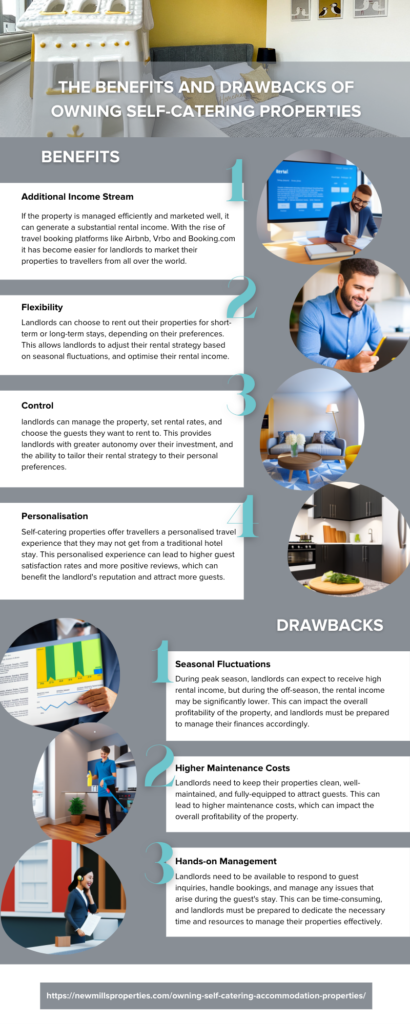
  1. Additional Income Stream: One of the most significant benefits of owning a self-catering property is the potential for additional income. If the property is managed efficiently and marketed well, it can generate a substantial rental income. With the rise of travel booking platforms like Airbnb, Vrbo and Booking.com it has become easier for landlords to market their properties to travellers from all over the world.
  2. Flexibility: Self-catering properties provide greater flexibility than traditional rental properties. Landlords can choose to rent out their properties for short-term or long-term stays, depending on their preferences. This allows landlords to adjust their rental strategy based on seasonal fluctuations, and optimise their rental income.
  3. Control: Landlords have greater control over their self-catering properties than traditional rental properties. They can manage the property, set rental rates, and choose the guests they want to rent to. This provides landlords with greater autonomy over their investment, and the ability to tailor their rental strategy to their personal preferences.
  4. Personalisation: Self-catering properties offer travellers a personalised travel experience that they may not get from a traditional hotel stay. With self-catering accommodation, travellers have access to a fully-equipped kitchen, allowing them to cook their own meals using local ingredients or eat out and experience local cuisine. This personalised experience can lead to higher guest satisfaction rates and more positive reviews, which can benefit the landlord’s reputation and attract more guests.

Drawbacks of Owning Self-Catering Properties

  1. Seasonal Fluctuations: Self-catering properties are often subject to seasonal fluctuations. During peak season, landlords can expect to receive high rental income, but during the off-season, the rental income may be significantly lower. This can impact the overall profitability of the property, and landlords must be prepared to manage their finances accordingly.
  2. Higher Maintenance Costs: Self-catering properties require more maintenance than traditional rental properties. Landlords need to keep their properties clean, well-maintained, and fully-equipped to attract guests. This can lead to higher maintenance costs, which can impact the overall profitability of the property. However, landlords can mitigate these costs by investing in high-quality furniture and appliances, and hiring a professional cleaning service.
  3. More Hands-On Management: Self-catering properties require more hands-on management than traditional rental properties. Landlords need to be available to respond to guest inquiries, handle bookings, and manage any issues that arise during the guest’s stay. This can be time-consuming, and landlords must be prepared to dedicate the necessary time and resources to manage their properties effectively.

Conclusion

Self-catering properties offer a unique investment opportunity for landlords, providing them with the potential for additional income, flexibility, and control over their investment. However, it is important for landlords to consider the drawbacks of owning self-catering properties, such as seasonal fluctuations, higher maintenance costs, and more hands-on management. With careful planning and management, self-catering properties can provide landlords with a profitable investment opportunity and travellers with a personalised and memorable travel experience. By investing in high-quality amenities and providing excellent customer service, landlords can create a positive reputation for their properties and attract a steady stream of guests.

New Mills Properties offers property investors a property sourcing and refurbishment service for anyone looking to invest in self-catering accommodation in Greater Lincolnshire. Call 01472 360178 or email purchaser@newmillsproperties.com to find out more.
For landlords of self-catering accommodation we also offer a management service that handles the day-to-day marketing, guest booking, maintenance, repairs and cleaning. Call 01472 360178 or email info@newmillsproperties.com to find out more.